• Events
  • CV
  • Listen
  • Read
  • CEB
  • Contact
Menu

Michael Lobsang Tenpa

Street Address
City, State, Zip
Phone Number

Your Custom Text Here

Michael Lobsang Tenpa

  • Events
  • CV
  • Listen
  • Read
  • CEB
  • Contact

The Liberating Neigh of Hayagriva

August 8, 2025 Mikhail Morozov

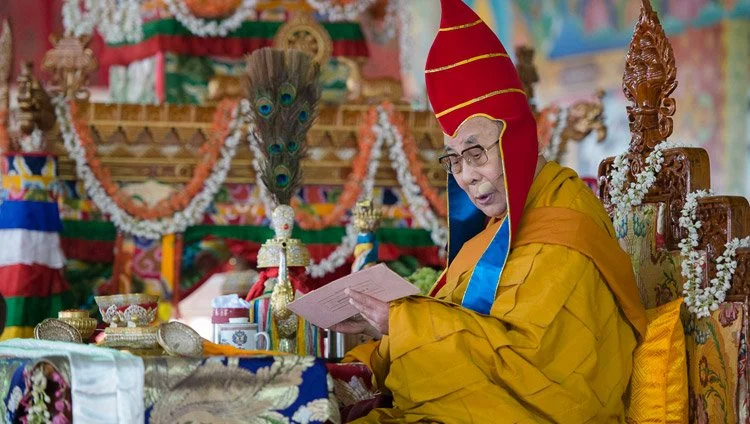
His Holiness the Dalai Lama bestowing the Hayagriva Empowerment at Sera Jey Monastery's debate courtyard in Bylakuppe, Karnataka, India on December 20, 2017. Photo by Lobsang Tsering

This blogpost on the Most Secret Hayagriva (Tamdring Yangsang) practice was originally written for the Jamyang Buddhist Center

Tibetan Buddhism is famous for its colorful and diverse depictions of enlightenment, with buddha-forms of many colors bearing multiple attributes in their multiple hands. In an attempt to avoid confusion or misinterpretation, some Tibetan Buddhist communities in the West try to limit the number of wrathful images displayed openly, but a quick visit to a temple in the Himalayan region would still introduce one to the vastness  and expressiveness of the artistic system. Some people erroneously believe that Tibetan Buddhism has a monopoly on these dynamic images, and some confuse them with images of worldly spirits or local pre-Buddhist deities. However, a quick tour of Chinese and Japanese Buddhist temples reveals that these dynamic wrathful forms are common to the Mahāyāna countries and have been seen as expressions of wisdom and compassion even since the times of the great Indian mahasiddhas.

One form that can be equally seen in China, Japan, and Tibet is that of Hayagriva: the horse-crowned form of Avalokiteśvara, or the buddha/bodhisattva of compassion. The roots of Hayagriva’s form might go to pre-Buddhist times: much like Mongolians, ancient Aryans had great appreciation for horses, and the emergence of divinities bearing horse-related symbols was almost inevitable. One such divinity—the Hindu Hayagriva—came to be seen as an avatar of Vishnu the Preserver; manifesting in a form bearing a horse’s head, Vishnu, as is typical for him, preserves universal order and harmony while also symbolizing the qualities of wisdom and learning. Another form, adorned with horse heads above the main anthropomorphic head, arose in the context of Buddhist tantra; evolving from a secondary figure in Avalokiteśvara’s retinue, Hayagriva eventually became a major self-sufficient expression of compassionate qualities, serving, either as a Dharma protector (a dharmapala) or as a titular meditational deity (ishta-devata, or yidam in Tibetan) for multiple generations of practitioners across the world.

In the Chinese-speaking countries, Hayagriva is primarily invoked as a protector: a field of energy that can be accessed to create positive interdependence that removes inner obstacles and, potentially, even protects one from outer dangers. In Japan, Hayagriva is worshipped as Bato-Kanon (or “the horse Avalokiteśvara”): the expression of wise compassion in the realm of animals. For Mongolians, who have a very strong historical connection to horses, he serves as the protector of these beautiful animals (and, in some cases, also as a guardian for those born in the astrological year of the horse). But Hayagriva’s most exciting role has perhaps been played in the Himalayan region, including Tibet. It is here that his practices became a major tool on the path to full awakening, sometimes serving as a full path for those who (through thorough training) have become ready to work on the advanced practices of tantra.

All of the major Tibetan lineages have received and preserved different Hayagriva-related transmissions originating in India. For the example,  the first Karmapa, Dusum Kheynpa, practiced a five-deity Hayagriva method that originally came from Atīśa. For the Sakya tradition, an important long-life practice combining Hayagriva with Āmitāyus is connected to the legacy of the great master Thangtong Gyalpo (famous for his Prayer that Saved Sakya from Disease). However, the greatest emphasis on Hayagriva methods is found in the Nyingma tradition of Padmasambhava and in the Sera Je lineage of the Gelug tradition; the latter is a derivative of the former and is firmly rooted in the legacy of Guru Rinpoche.

Most Secret Hayagriva

Although there are dozens of Hayagriva forms, two play an important role in the Gelug tradition: the Hayagriva of “Secret Accomplishment” (Sangdrub Tamdrin), seen as a more exoteric and accessible practice, and the “Most Secret” Hayagriva (Yangsang Tamdrin), that, true to its name, remains more exclusive, both because it belongs to the highest levels of tantra and because of its intricate, technical nature. Both practices originally came from the Nyingma tradition, and so it might be worthwhile to look at their roots.

In the Nyingma system of tantric practice, Hayagriva methods primarily belong the seventh out of nine vehicles, or Maha-Yoga, which roughly corresponds to the generation stage of highest yoga tantra as described in the new translation schools. Maha-Yoga teachings, in turn, are divided into the classes of tantras and sadhanas; the sadhana class is divided into the three roots of guru, deity, and dakini. The deity section is then broken down into what’s known as the “Eight Logoi” or “Eight Pronouncements” (or Kagye in Tibetan): eight systems of practice that were carefully collected and transmitted by Guru Padmasambhava in order to serve as the liberating methods for beings with different propensities. Amongst these “eight pronouncements”, which correspond to the different facets and activities of enlightenment, Hayagriva belongs to the second one, known as “Lotus Speech”.

The “Lotus Speech” system of practice is said to have originated with Nāgārjuna, although it is hard to say whether the Nāgārjuna in question is the very same one who penned the famous texts on emptiness and retrieved the Parjnaparamita sūtras. Some scholars think at least 3 Nagarjunas might have existed: the scholar of sutras, the tantric siddha who wrote extensively on Guhyasamāja, and the tantric master who established the “Lotus Speech” lineage of transmission. From a Buddhist point of view, these three teachers might well have been one and the same—after all, if one lives for multiple centuries and works hard, quite a lot can be accomplished!

Nāgārjuna’s lineage of tantric transmission was received by Guru Padmasambhava, who brought the Hayagriva teachings (along with the rest of the Eight Pronouncements) to Tibet. Transmitting these teachings to his disciples, including king Trisong Detsen and Yeshe Tsogyal, Guru Rinpoche also made sure that most of these methods were concealed as treasures (Tib. terma) to be revealed by the pre-destined realized masters of future generations. Numerous terma teachings on Hayagriva have been revealed in the ensuing centuries—and this is where the origin of the Yangsang (Most Secret) Hayagriva teachings, practiced extensively in the Sera Je Monastery in Tibet, lie.

The specific treasure that forms the basis for the Most Secret Hayagriva practice was revealed in Dra Yerpa near Lhasa. Three lamas participated in the process of revelation, but the obstacles to the spread of this powerful method were initially so strong that one of the teachers passed away and two got sick. The lineage, however, was preserved, and eventually came down to a teacher by the name of Nyagton, who, in turn, transmitted it to a realized yogi named Darcharwa: a student of Sakya Pandita and a treasure-revealer in his own right. This lineage of transmission was combined with a more direct transmission that Darcharwa himself received from a magical emanation of Padmasambhava. Mixing the two lineages, Darcharwa established a powerful system of transmission that eventually found its way to Sera monastery (through the founder of Sera Je, Kunkhyen Lodrö Rinchen Senge) and remained unbroken until our own times, coming down to such masters as His Holiness the Dalai Lama, Lama Zopa Rinpoche, and, of course, the senior tantric masters of the Sera monastery. Since Hayagriva practices still retain their Nyingma flavor (when it comes to the unique style of performing tantric practice), Sera Je monastery maintains a whole committee of monks thoroughly trained in this practice and its technical details. This thorough training, combined with the insights and experiences of the great masters of this lineage (including the Fifth Dalai Lama), makes sure that this system remains potent and transformative.

The essence of Hayagriva practices

There are many ways to describe the essential logic of each of the Eight Pronouncements. The practice of Vajrakilaya, for example, is sometimes described in terms of the “four stakes” (or kilas), while the practice of Mañjuśrī-Yamāntaka is related to the so-called “four wheels”. For the Nyingma teachings on Hayagriva, the essence of practice is traditionally explained through the “three neighs” related to the symbolic horse above the deity’s head. The first neigh cuts through our conceptual grasping at the reality of things, or their inherent origination; the second one transforms reality into a cosmic blissful offering; the third one establishes control over everything that exists. This forceful nature of Hayagriva practice explains why it is often (when it comes to the Himalayan region, at least) used for removing obstacles and establishing positive magnetizing interdependence. Even when Hayagriva is not practiced as the primary deity, he often serves as an auxiliary figure meant to inspire us in mastering compassionate magnetizing activity. (As an example of that, he is invoked in Mipham Rinpoche’s famous “Great Cloud of Blessings” prayer).

Like with any other Buddhist tantric practice, our movement towards the qualities of Hayagriva begins with foundational-level training: working on our ethical intelligence, stabilizing our mind, learning to understand the afflictions, strengthening the positive habits of our mind, and so forth. To truly receive a Hayagriva empowerment, one would need to have at least a basic level of experience related to three principal aspects of the path: renunciation, bodhicitta, and the wisdom of emptiness. Having established those through training in lamrim or similar systems, one would find a qualified teacher, receive the necessary empowerments, transmissions and instructions, and then start gradually training in Hayagriva methods proper, uncovering the dynamic compassion that is so badly need to be of service to others and to cut through our own selfish, deluded mind. If that process is of interest to us, we will be powerfully supported by the inspiring examples of past masters, including that of such recent lineage teachers as Lama Zopa Rinpoche and Lama Thubten Yeshe, both of whom were accomplished Hayagriva masters and skillfully benefitted beings through their “triple neigh”.
River of Awareness: Buddhist ways to explore consciousness

August 8, 2025 Mikhail Morozov

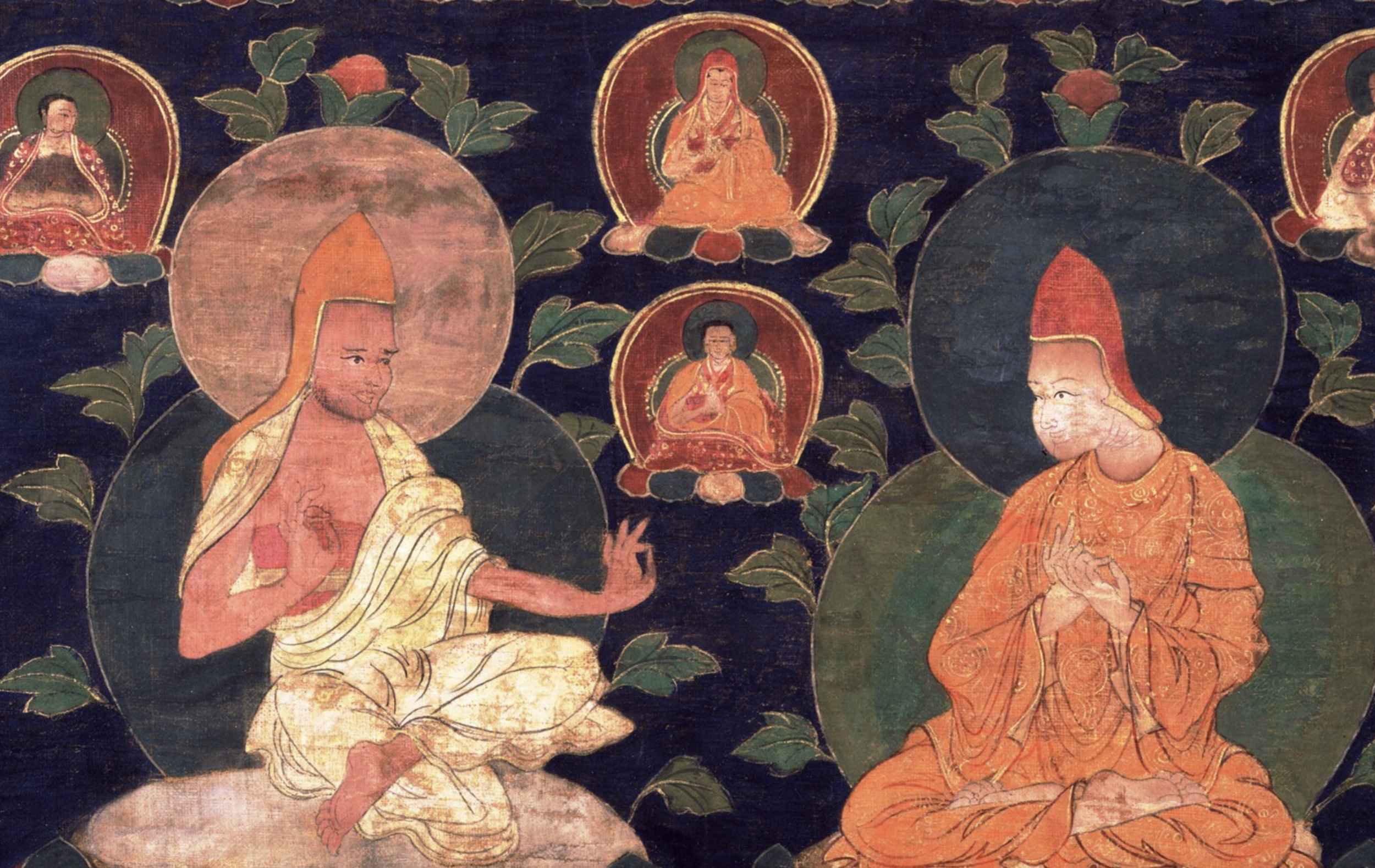
Asanga and Vasubandhu, image from the Himalayan Art Collection

This blogpost was originally written for the Jamyang Buddhist Center

Everything Lord Buddha said, his entire philosophy and doctrine, was for the purpose of penetrating to the essence of our being, of realizing the nature of the human mind.

Lama Thubten Yeshe, The Peaceful Stillness of the Silent Mind

For Westerners coming to Buddhism for the first time, there is sometimes a bit of a terminological bump early along the way. “If Buddhists don't believe in a soul,” some of us might remember asking, “then what is it that’s getting reborn and potentially liberated from samsara?” The general answer is the mind, and one might spend the rest of one's life, if not multiple lifetimes, diving into the complex understanding of consciousness that Buddhism has develped over the course of its history. For some traditions, it is precisely through solving the mystery of the mind (and its deeper nature) that one actually becomes liberated and enlightened—so there are many reasons to take this exploration seriously.

Early roots and Pali sources

The foundation for the Buddhist view of the mind was established by the Buddha himself. Many would probably recall the opening verses of the Dhammapada, arguably the most famous Buddhist text in existence:

All experience is preceded by mind,
Led by mind,
Made by mind.
Speak or act with a corrupted mind,
And suffering follows
As the wagon wheel follows the hoof of the ox.

All experience is preceded by mind,
Led by mind,
Made by mind.
Speak or act with a peaceful mind
And happiness follows
Like a never-departing shadow.

(Transl. by Gil Fronsdal)

These famous words signify that the origination of happiness and suffering is, for Buddhists, fully dependent on the mind. However, beyond the interconnected dynamics giving birth to happiness and suffering lies an even more fascinating type of interdependence: the path that potentially leads to a full purification of the mind, leading to the type of happiness that Robert Thurman refers to as “the ultimately enjoyable experience, the blissful freedom”.

In presenting his teachings on the eightfold noble path, the Buddha presented the specifics of what is to be done with the mind. Quite importantly, he also delivered a separate set of sermons on the functions of the mind, along with the general structure of the phenomenal world. According to the traditional presentation, these teachings, known as Abhidharma in Sanskrit and Abhidhamma in Pali, were delivered in a divine dimension that the Buddha visited in order to mentor his late mother. Later, the Buddha repeated the same teachings for his liberated disciple Shariputra, who, in term, transmitted them further, through a lineage of disciples that eventually put them to writing. In the Pali tradition, these teachings form the foundation of the Abhidhamma-Pitaka, or “the basket of higher doctrine”; commentaries on these teachings serve as the traditional Pali textbooks on the functions and composition of the mind. These explanations on the mind’s structure and workings have been traditionally used by the Buddhists of Sri Lanka, Thailand, Myanmar, Cambodia, Laos and Vietnam, and the study of these sources (now available in several modern editions, such as the one prepared by Bhikkhu Bodhi) remains a veritable source of psychological wisdom.

Sanskrit presentations of the mind

Around the 2nd century AD, the same teachings on the mind (along with all the other phenomena) caught the attention of two brothers, now known to us as Asanga and Vasubandhu—two of the most illustrious thinkers of Ancient India. These two scholars-practitioners, whose influence on the various branches of Buddhism is hard to overestimate, were deeply interested in yogic practice and the true nature of the mind. Asanga, guided by his visionary encounters with the bodhisattva of loving kindness Maitreya, penned down a number of treatises dealing with the yogic transformation of the mind and with the mind’s true potential; Vasubandhu, amongst other things, composed a number of commentaries of the tenet system of “mind-only”, and even left us with a practice-oriented treatise on achieving a Pure Land rebirth. However, both brothers were also actively interested in the makeup of the world we experience and the mind that does the experiencing. For that reason, they each wrote a major Abhidharma treatise, and it is these two works—The Treasury of Abhidharma for Vasubandhu and The Compendium of Abhidharma for Asanga—that still form the basis for the mind-related studies in the Mahayana tradition, especially as practiced in the world of Indo-Tibetan Buddhism.

Over time, the study of these two Abhidharma works has become the foundational way of learning about the mind for Tibetan Buddhist monastics. In the Gelug tradition, which forms the basis for the FPMT’s curriculum, the mind section of Abhidharma is generally combined with an exploration of valid cognition (or pramana). This unique combination of disciplines, known as Lorig (or “Mind and cognizers”), is often studied early in one’s academic career, helping monastics to better understand the workings of their own mind and the mind as an interdependent phenomenon in general. Due to the spread of Buddhism around the world, more and more people get a chance to study elements of Lorig in such programs as the FPMT’s Discovering Buddhism.

The study of the mind through the Lorig lens is as sophisticated as any other academic subject. Relying on the foundational definitions established by Asanga and Vasubandhu, students learn about the different mental functions (or, in the technical language of Buddhism, mental factors) and primary types of consciousness, learning to identify each one by its function—the specific type of awareness each state is responsible for. A serious practitioner would also use this as an invitation to identify the very same mental states in their own mind, learning to see how mindfulness, faith, attachment, anger, laziness and many other mental functions come and go, working together to weave the experience we call “being alive.” Later on, this understanding helps one explore the more advanced teachings of Asanga, learning how a specific combination of mental functions helps one progress through the stages of mental evolution leading to full awakening. The same type of knowledge can also aid one’s meditation: while not indispensable, a thorough understanding of the mind’s functions along with their definitions can help us subdue the negative mental states and strengthen the positive ones.

Diving right in: the meditative approach

While the Abhidharma / Lorig approach to studying the mind is undeniably important (to the point of serving as a major element of the dialogues between Buddhism and science, often organized by the Mind & Life Institute), there are other approaches to understanding the mind—or, rather, other tools for looking at it in order to get what the mind is. One such approach is expressed in the practice-oriented teachings commonly referred to as the “nature of the mind” practices, most powerfully represented by the Mahamudra (or “Great Seal”) and Dzogchen (“Great Perfection”) systems of practice in Tibetan Buddhism.

Mahamudra, just like its counterpart, Dzogchen, is a meditation-based approach to understanding the mind and its nature. This means that in order to understand the mind, one meditates on the mind—observes it directly and eventually also probes into its deeper nature. There are, in fact, multiple subsystems of Mahamudra, sometimes classified as the three main branches: the exoteric Mahamudra of sutras, the esoteric Mahamudra of tantras, and the innermost Mahamudra of the essence. All three of these styles (representing different, though fully compatible, strategies for understanding the mind) trace their lineage back to the great yogis and yoginis of ancient India; it was the hands-on approach of such masters as Saraha and Maitripa that gave rise to this highly experiential approach. These masters, many of whom were also great scholars, explored the mind by meditating on it, pushing their experiential exploration to the limit—all the way up to full awakening.

The teachings of Mahamudra, which naturally draw a lot of interest from Westerners who are short on time but have high aspirations (and, in the words of Lama Yeshe, want to taste the chocolate), are simple in their logic but not easy in application. In order to progress through the stages of practice, one has to rely on expert guidance, eventually spending thousands of hours in careful observation and probing. For example, for the style of sutra mahamudra, one would first seek to master the calm abiding (shamatha) meditation on the mind as the object; with that, having experienced the very flavour of one’s conventional-level mind with unprecedented clarity, one proceeds to insight practice (vipashyana) in order to understand the mind’s ultimate way of existing. Similar processes using other types of techniques exist in tantra mahamudra (which is the source for the Indo-Tibetan teaching on the different levels of mind’s subtlety) and essence mahamudra.

One keyword that unites the study of Abhidharma with the practice of Mahamudra, is, of course, the word mind itself: the very thing that, according to the Buddha, precedes all experiences and is to be explored. Another key word is probably rigour: neither approach can be mastered without exploring and applying the associated teachings over the course of multiple hours, if not years (or lifetimes). Yet what could be more rewarding and exciting? Some of the rewards come almost immediately: the more one understands one’s mind, the easier it is to make the mind happy, transforming the more painful and deluded mental states into ones that are realistic and joyful. To the degree that we are able to become scholars-practitioners armed with the different teachings on the mind (or, rather, different tools for looking into the mind), we are able to awaken ourselves to the blissful freedom that, according to Mahamudra teachings, is always within our reach. What we need on this path is a supportive community, a number of qualified teachers, our own dedication to practice and a type of curiosity that scientists and naturalists have; with all that in our resource kit, we will be able to go on the most exciting journey ever—the journey to the heart of our own awareness where happiness and freedom are said to abide.

Learning from the Shāstras: On Letter to A Friend and Entering the Middle Way

August 8, 2025 Mikhail Morozov

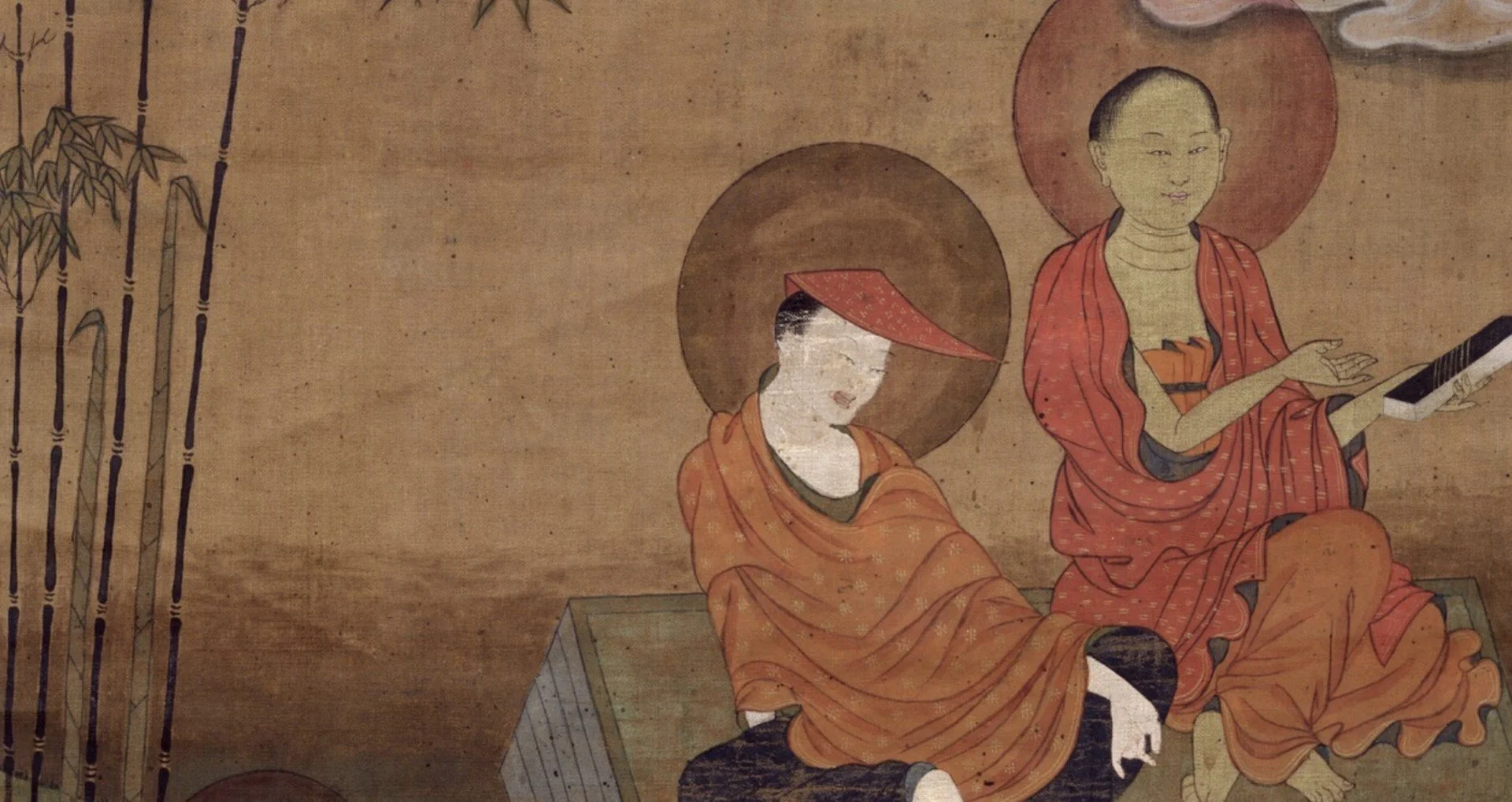
Image of Nagarjuna from Himalayan Art Collection

This blogpost was originally written for the Jamyang Buddhist Centre

The Indo-Tibetan tradition of Buddhism is keen on reading—for those who are are literate, of course, since there have always been throngs of practitioners who couldn’t read and memorized their prayers through repetition. Being literate meant having access to an incredible profusion of practice-oriented  material, including the 108 volumes of the Kangyur (the translated teachings of the Buddha) and 220 volumes of the Tengyur, comprised of the translated treatises composed by the great Indian masters.

The very way of reading these texts was quite different from the way we read fiction now. Some masters, due to the strength of their memory and intellect, could master a specific teaching relatively fast—even when it was extremely expansive. The legendary Patrul Rinpoche, for example, on one occasion dedicated himself to reading the entire Kangyur three times, reading a page and then prostrating before 3 times. Being an exceptional individual, he was able to therefore grasp numerous key points contained in the sutras and tantras, effortlessly retaining them in his memory. Other masters are more in favor of re-reading a text multiple times, going deeper and deeper into its meaning, thus mirroring the Tibetan saying “Read the book seven times, and you will develop seven layers of understanding.” A famous example is His Holiness the Dalai Lama, who had, by 1986, perused his personal copy of Lamrim Chenmo (that he personally carried out of Tibet in 1959) no fewer than 72 two times.

The shastras

Amongst all of the reading material so richly present in the Indo-Tibetan tradition, the genre of śāstra stands out as particularly important; it is because of śāstras and their influence that His Holiness the Dalai Lama refers to Tibetan Buddhism as “the Nālandā tradition”.

Śāstras are treatises composed by the great masters of India, particularly those from the three great monastic universities of Nālandā, Odantapuri and Vikramaśilā. The Tibetan term for śāstra texts, phonetically pronounced as tenchö (Wylie: bstan bcos), is sometimes unpacked to mean “something that heals or protects” (bcos) a teaching (bstan). In other words, these are the treatises that protect the teachings  from dying out. How do they do this? By organizing and clarifying the key elements taught in the Buddha’s sutras. A good example is the relationship between the extremely voluminous Prajñāpāramitā sutras (which go all the way up to a 100 000 verse version), and their condensation in the Madhyamaka treatises of the great Indian philosophers.

According to Khenpo Kunzang Palden, who authored an influential commentary to Śāntideva’s Bodhicaryāvatāra, treatises can fulfill four aims (and are therefore divided into four categories): (1) they can impose order on that which appears disorganized; (2) they can explain difficult points; (3) they bring together scattered elements, and, finally, (4) they introduce us to specific practices. It is sometimes fun to think of a particular śāstra through the lens of this classification: how can this particular text, studied and applied for more than a thousand years, bring greater clarity to my personal understanding of the Buddhist view and to my contemplative practice?

Letter to a Friend

Not all śāstras are necessarily extremely long, and not all of them deal with such complex issues as the theory of valid cognition. Arguably, no shastras are that easy to understand, but neither are they completely incomprehensible, especially if one is equipped with a good translation, a good commentary, and a good teacher to guide one through the text. Two of the most practical śāstras studied extensively to this day are Śāntideva’s Bodhicaryāvatāra and Nāgārjuna’s Suhṛllekha. If looked through the lens of the śāstra classification offered above, these two texts seem to both gather scattered points and offer practical advice. It is for this reason that both are commonly taught to monastics and lay people: the study of these ancient versified texts can bring us immediate practical benefit, challenging our philosophical assumptions and helping us adjust our behavior.

Much like Bodhicaryāvatāra, Nāgārjuna’s Suhṛllekha, or Letter To A Friend, is essentially a long poem, written as a personal friendly advice to a Central Indian king. Since the Sanskrit version of the text has not been found, we can only guess what the king’s actual name was; different translators have suggested such versions as Gautamiputra, Udayibhadra, Surabhibhadra, Udayana, and so on. While the specifics of the king’s identity remain a mystery, what we can deduce is that the ruler in question Buddhist practice very seriously. This is confirmed by the fact that Nāgārjuna, being one of the most brilliant scholars-practitioners of Ancient India, does not limit his advice to a few general statements on royal conduct or ethical behavior; instead, he outlines the entire Mahayana path, and does it so thoroughly that multiple mutually supportive interpretations of the text were later devised in Tibet. Some masters, as is typical for the Gelug tradition, structure their explanation of Nāgārjuna’s root verses in accordance with the graduated path of the three types of beings; others, such as Sakya Pandita, use the logic of the three higher trainings, and yet others (including Mipham Rinpoche) explore the logic of the six perfections. What this means is that Letter To A Friend is a wonderfully rich, and yet extremely practical, composition; it can be explored and explained in any number of ways (and any number of times), but it can also be applied right now—as soon as we start reading the root verses and receiving a competent commentary to them. Each verse can bring about multiple positive shifts; we just need to start somewhere.

Entering the Middle Way

Letter To A Friend is often quoted in the “stages of the path” (lamrim) texts, much more often than any other composition by Nāgārjuna, whose main body of work has to do with the philosophy of Madhyamaka and the complex interrelationship of interdependence and emptiness. The reason is that Letter To A Friend contains multiple ideas that can resonate with us right here, right now—before we would take the leap into the depths of the Middle Way philosophy. For Nāgārjuna’s lineage disciple Chandrakirti, the most commonly quoted work is Madhyamakāvatāra, or Entering the Middle Way. Chandrakirti’s other works dive deeply into the topic of emptiness, and yet way fewer people explore those—but almost everyone in the Indo-Tibetan literary world has heard the opening lines of Madhyamakāvatāra:

Śrāvakas and middle-level buddhas arise from sovereign sages.
Buddhas are born from bodhisattvas.
The compassionate mind and nondual cognition
as well the awakening mind: these are causes of bodhisattvas.

As compassion alone is accepted to be
the seed of the perfect harvest of buddhahood,
the water that nourishes it, and the fruit that is long a source of enjoyment,
I will praise compassion at the start of all.

(Transl. by Geshe Thubten Jinpa)

Entering the Middle Way is not focused on compassion alone, but neither does it exclusively cover wisdom. It rather presents a fascinating merging of the two, structured on the basis of the Ten Grounds Sūtra (which is itself a part of the larger Avatamsaka Sūtra, one of the most majestic examples of sūtra teachings in the Tibetan and Chinese canons). In his 330 poetic verses, divided into 11 chapters, Chandrakirti takes the reader both through the 10 grounds of the bodhisattva path and through the 10 perfections that ought to be realized if one is to attain the perfect enlightenment. Since the sixth of the perfections, wisdom (or prajñā), is the main topic of both Prajñāpāramitā-sutras and Madhyamaka literature, Chandrakirti’s sixth chapter forms about 70 percent of text, taking the reader into a fascinating exploration of emptiness. Through this, Chandrakirti is sometimes said to provide a meaning commentary to Nāgārjuna’s main śāstra, Root of the Middle Way. By contrast, Chandrakirti’s other famous work, Clear Words, provides a word-for-word commentary to Nāgārjuna’s composition.

How would one go about tackling something as momentous as Madhyamakāvatāra, with its 330 verses, complex logic and numerous references? One idea is to rely on the Tibetan tradition of textual study, which combines receiving an oral explanation, reading a written commentary, and slowly exploring the rich meaning of the root verses; this, of course, later leads to deep reflection and culminates in meditation. Why rely on so many additional means and not just work with the root text directly? Because many of us come from a completely different cultural background. Without being equipped with a thorough understanding of the entire reference system, one might either feel completely lost or develop an incorrect (even if bold) interpretation. Although this type of study seems complex, it actually flows smoothly, once one gets into the groove, and gives us a chance to integrate some brilliant psychology and philosophy into the fabric of our meditation and our daily life. By contrast, without studying śāstras, at least briefly, one might miss the chance to connect to the incredible legacy of Nālandā masters: the legacy that His Holiness the Dalai Lama always praises as one of the greatest treasures of humanity, capable of transforming the way we think, feel, and live.

Finding the footprints of the Lotus-Born

November 22, 2024 Mikhail Morozov

This essay was originally written for the Jamyang Buddhist Centre in London

If we had to choose a historical figure that left the greatest imprint on the landscape of Indo-Tibetan Buddhism—next to the historical Buddha himself—very few individuals would be able to compete with the towering greatness of Padmasambhava. This teacher, whose name translates to “Lotus Born” and whom Tibetans affectionately call “Guru Rinpoche” (Precious Guru), is, in actuality, more than a mere individual: he could more appropriately be described as a field, since both his activities and his teachings preserved to this day form a vast and dynamic network that still affects the world in small and large ways. (Beyond that, we could say that each one of us is a field of interdependent phenomena—except Guru Rinpoche was able to turn his phenomena into expressions of enlightenment).

Padmasambhava’s role in the history of Tibetan Buddhism is hard to overestimate. Invited by the king Trison Deutsen and Nālandā scholar Shantarakshita to Tibet as a tantric adept, he famously subjugated the local obstructing forces, trained a bevy of highly qualified tantric practitioners, and transmitted numerous practice cycles that were both preserved orally and hidden for future generations as the so-called “treasure teachings” (terma).

What happened before this period of intense activity (roughly corresponding to the 8th-9th centuries) is a bit of a mystery: it is safe to assume that he spent many years receiving, applying, and realising the teachings of sūtra and tantra, but the specifics of how that occurred are described somewhat differently in his different hagiographies. As a figure associated with the highest degrees of realisation, Padmasambhava is very elusive when it comes to biographic specifics—and extremely vivid when it comes to his teaching legacy and his place in the spiritual life of Buddhist practitioners across the Himalayan region, where he is still invoked daily for help in matters ranging from the safety of cattle to realising enlightenment. One could perhaps say that the footprints of Guru Rinpoche are too numerous for him to fit into a neat, simple, coherent biography; and yet chasing him across time, space, and the Dharma itself is a fascinating journey worth undertaking, at least as a mental (or virtual) experiment.

Guru Rinpoche in time

Guru Rinpoche’s birth is in itself a big mystery. His very name, Padmasambhava, implies that he was miraculously born from a lotus, and some hagiographies indeed describe just that—an emanation of Buddha Amitābha appearing on lake Dhanakosha as a little boy who soon gets discovered and adopted by the local king. Other descriptions, however, talk of Padmasambhava’s physical birth from flesh and blood parents, or describe him miraculously appearing in a different part of India. To summarise it all, in one of Guru Rinpoche’s own treasure teachings (rediscovered by Chokgyur Dechen Lingpa in the XIX century) he states:

Perceived by some, I magically appeared in Uḍḍiyāna,
Upon a lotus flower on the waters of Dhanakośa.
Perceived by others, I was the son of Uḍḍiyāna
’s king.
Perceived by still others, I descended as a thunderbolt
Onto the peak of Mount Meteoric Iron.

Guru Rinpoche proceeds to say that this happened 24 years after the passing of Buddha Śākyamuni. As a young man, he also reportedly studied the sutric discourses with Ānanda, the Buddha’s primary attendant. This immediately raises a question: doesn’t that mean that Padmasambhava lived for at least a thousand years, all the way up until the time of King Trisong Deutsen? Well, that is exactly what’s implied. Guru Rinpoche’s pre-Tibetan path includes many episodes, mostly related to study and practice, and one his main achievements, shared with princess Māndārava, is him gaining the realisation of an “awareness holder” (vidyadhara) of immortal life, therefore transcending death and aging. To an academic or someone firmly holding onto the view of reductionist materialism, that idea would only be acceptable as a literary device; to a Buddhist practitioner from the Himalayan region, it’s just a given—why can’t an enlightened being stay in this world longer if needed for the benefit of all beings? While materialistic systems describe the world as built from solid blocks of matter (with no significant role for consciousness, unless we describe it a mere byproduct of the electrical activity of the brain), Padmasambhava’s own view on reality, the Great Perfection, sees the world as a create display of awareness energy: matter is seen as secondary, pristine awareness as primary.

In the years before his realisation of immortality, Padmasambhava was primarily collecting and mastering different cycles of tantric practice, famously studying with the eight vidyadharas of India and with dakini Karmendrani. The following years—or, rather, centuries—were spent perfecting the realisation of those teachings and, on occasion, helping others through miraculous powers (a famous episode involves Guru Rinpoche being invoked by the chanting of the Seven-Life Prayer and saving Nālandā from the black magic of tirthikas).

Eventually, while in Nepal, he received the invitation from king Trisong Deutsen; upon arriving to Tibet, he performed numerous Dharmic activities, participating in the creation of Tibet’s first monastery, Samye, and transmitting numerous cycles of tantric practice. The length of his stay in Tibet is a bit of a mystery as well, sometimes assessed as 55 years and a half.

Although Guru Rinpoche is said to have departed our conventional world at the end of his stay in Tibet, he is still deeply embedded in the cycles of time we go through right now: cyclical time instead of linear. Each 10th lunar day, in particular, is celebrated as a Guru Rinpoche practice festival, associated with one of his many energetic forms and one of his major deeds. This means that there are 12 such days in each year, and this number is further correlated with Padmasambhava’s 12 emanations, with the 12 syllables of his mantra, and with the 12 links of dependent origination that his mantra is said to purify. Because of this, Guru Rinpoche is never relegated to the past: he is believed (following his own promise) to visit our world at least once a month, providing guidance and help to all those who require those and take a moment or two to supplicate him using one of the numerous prayers that he inspired or left behind. In his own words,

For anyone, man or woman, who has faith in me,
I, the Lotus Born, have never gone away — I sleep at their threshold.
When the morning light rays shine and the evening light rays fade,
and also at dawn on the tenth lunar day,
I will always come for the well-being of Tibet.

Guru Rinpoche in space

In addition to leaving numerous footprints in time, Guru Rinpoche has certainly left numerous imprints in space as well, sometimes quite literally: by melting the rocks and imprinting himself on the walls of caves. Modern-day India, especially in Sikkim and Himachal Pradesh, has many places associated with Padmasambhava’s activity or his concealed (and then rediscovered) teachings. Such places are equally present in Bhutan (where one finds the famed Tiger’s Nest) and Nepal (where Guru Rinpoche practiced in charnel grounds and planted the famous bodhi seeds)—and when one gets to Tibet, the holy caves and sites become too numerous to mention.

While there is no pressure for someone to ever visit all of Guru Rinpoche’s holy places—it is quite unlikely that even the greatest master of his own Nyingma lineage were ever able to do so—connecting with one or a few, even from afar, can be highly meaningful. One of the most accessible places in this regard is the Boudhanath stupa in Kathmandu, believed (on the basis of a particular treasure teaching) to be the foundation of the unique karmic connection between Padmasambhava, Trisong Detsen, and Shantarakshita. The treasure version of this stupa’s history describes these three Buddhist masters as having been brothers in their past life—brothers, who, following their mother’s wish, constructed and consecrated the great stupa, dedicating their merit to the future act of bringing the Dharma to the north (to Tibet). For this reason, followers of Tibetan Buddhism see Boudha as the energetic source for their own tradition; that, combined with the fact that Guru Rinpoche practiced in a charnel ground located right next to the stupa, explains why so many holders of Guru Rinpoche’s tradition established their monasteries in the Boudhanath area, easily accessible by anyone visiting Kathmandu.

Guru Rinpoche in the Dharma

What, then, of Guru Rinpoche’s footprints in the domain of Dharmic teachings? One thing worth mentioning is that his very hagiographies serve as a major source of wisdom, so much so that some masters use them as their primary source of literary learning. In his famed autobiography, Blazing Splendour, Tulku Urgyen Rinpoche mentions just such a scholar:

This khenpo, known as Jokyab, was renowned for his literary skills. He later told me that this was due to having studied the extensive biography of the Lotus-Born master, the Golden Garland Chronicle, when he was quite young. “I walked everywhere with that volume slung over my shoulder, and I asked every lama I came across for teachings on different passages.” In this way, he became well-versed in the Buddhist teachings.

Beyond that, however, we have Padmasambhavas’s actual instructions, still preserved and widely practiced to this day. To demonstrate his intellectual mastery of Buddhist tenet systems, Guru Rinpoche at one point penned a brief text called Garland of Views, striking in its ability to build a bridge between the more foundational tenets and the highest view of Great Perfection, which was Padmasambhava’s own primary way of looking at reality. This text is the only composition by Guru Rinpoche that’s preserved in the texts of the kama, or the long-transmission tradition: the texts and teachings that have been preserved and aurally transmitted from the times of Trisong Deutsen until now.

The rest of Padmasambhava’s teachings belong to the treasure (terma) category, and their sheer vastness defies imagination—as does their transformative power, since it is through applying those very teachings that most Nyingma masters to ever achieve the rainbow body have been able to do so. The beauty of these teachings is in how diverse and flexible they are: Guru Rinpoche left behind cycles that take up thousands of pages, but also teachings that only contain a few lines. His more elaborate instructions baffle even the most learned scholars, while his pithy teachings can be applied and understood even by illiterate (but devoted) practitioners who only require one or two short practice liturgies and a few quintessential pointers related to the true nature of reality. Above all, these teachings are extremely practice-oriented, and it is for that reason that they have been quickly gaining popularity in the West.

Receiving Guru Rinpoche’s teachings and practicing them all the way to completion, is, of course, a wonderful way to connect to him and his field of inspiration—perhaps the very best, if that’s where our personal karmic connections lie. However, it’s not the only to build such a connection, since even those who primarily pursue other tantric paths (Kagyu, Sakya or Gelug, for example) have been known to be greatly devoted to the Lotus-Born Guru as an archetypal guru and a yogi par excellence.

Regardless of what we practice (or aspire to practice, if we’re still trying to figure out our contemplative trajectory), the sheer vastness of Padmasambhava’s presence makes him a perfect ancestral figure to look up to and draw inspiration from—a kindly father shared by all the followers of the Indo-Tibetan Buddhist tradition, ready to guide us to greater intelligence when it comes to navigating interdependent reality, and an unpredictable yogi capable of breaking through our rigid ideas. Finding Guru Rinpoche’s footsteps and following them to the source, in one way or another, could be a worthy and a deeply fascinating quest: a quest that could take us all the way back to our basic sanity, with all the qualities of wisdom and compassion dwelling therein.

Additional Links

Guided Meditation: Guru Rinpoche Practice

Padmasambhava Prayer by His Holiness the Dalai Lama

Padmasambhava Prayer for the Fifth Dalai Lama

Evenness, not Indifference

September 10, 2024 Mikhail Morozov

This blogpost was written for the Cultivating Emotional Balance monthly newsletter.

Cultivating and maintaining equanimity is a tough call for many reasons—including the fact that the term itself is somewhat difficult to understand. It does evoke the idea of mental evenness, but how exactly that evenness is supposed to come about is often not quite clear. To make matters worse, this evenness can be misperceived as aloofness or lack of emotion. As a translator, I’ve actually seen “equanimity” being mistranslated into other languages as “indifference”—and what an unhealthy and unrealistic ideal it would then appear to be!

The working definition of equanimity I’ve been introduced to many years ago describes it as a “state of mind that is equally free from neurotic attachment, aversion and indifference”. This state or attitude might be applied to other beings (which translates into equanimity as one of the four virtues of the heart, or the four immeasurables), or towards the different experiences that we have. In either case, what emerges is an image of a person that is profoundly rooted in inner calm and is yet free of aloof insensitivity; responsive and yet centred, warm-hearted and yet not desperately clinging at anything. I find it helpful to play with these words and actually envision equanimity as a quality that I can, through practice, come to embody on a deeper and deeper level. What would a truly evolved and equanimous version of me be like?

The key to equanimity, always implicitly present in equanimity-themed meditations, is wise discernment: discernment of interdependence, discernment of our deeper equality, and, quite importantly, discernment of our ability to both accept the situation (as something that has ripened as a result of multiple causes and conditions) and to continue steering it in the right direction through introducing more of the necessary causes and conditions. Deeply linked to wisdom (“an exceptional level of common sense”, in the words of Sylvia Boorstein), equanimity is a powerful ideal that, sometimes through mere recollection, can help us ground ourselves and continue moving towards greater emotional balance.

Infinite Life and an Enlightened Princess

September 10, 2024 Mikhail Morozov

This article was originally written for the Jamyang Buddhist Center in London

Nepal is very rich in holy sites—the sheer density of Buddhist and Hindu places of pilgrimage and worship in the Kathmandu valley easily rivals the density of holy sites in Jerusalem. In fact, while walking across the city, one might easily embark on several pilgrimages in a row, visiting the holy places of Vajrayogini, the holy sites of the bodhisattvas, the places of practice associated with Milarepa and Atīśa, and so forth. As one leaves Kathmandu, the holy sites become somewhat more sparse, but that does not affect their importance, since such places as Lumbini (the birthplace of the Buddha) draw numerous pilgrims on an annual basis.

One of the most important pilgrimage sites, located about a day's drive away from the capital, is Maratika—a large cave temple strongly connected to the lifestories of Padmasambhava and his Indian consort princess Mandarava. It was while practicing here that Padmasambhava, in the words of Lama Zopa Rinpoche, "achieved immortal realization, the state of Buddha Amitayus." However, what is that realization, and what did the princess and the guru practice? Is it available to everyone, and what, beyond a trip to Maratika, would it take to tap into that state?

The princess meets the Guru

Mandarava is one of one of the greatest adepts of Indian Buddhism. Although not included in the list of the 84 female and male mahasiddhas (or the greatly accomplished tantricas) of her time, she is believed to have attained some of the most incredible states of realization, including a transcendent state beyond physical death. The beginning of her story, however, is quite typical: much like Atisha, Yeshe Tsogyal, and the Buddha himself, she came from a royal family and developed an acute interest in spirituality at an early age.

By the age of 13 she grew to be so beautiful that many princes were vying for her attention. Refusing to choose a husband, she pleaded with her father, king Vihardhara, to be allowed to practice the Dharma, and eventually was allowed to receive vows of ordination from the great abbot Shantarakshita (the very same one who also brought monastic ordination, Madhyamaka philosophy, and the practices of lower tantras to Tibet).

Practicing with her fellow nuns (as her attendants), Mandarava spent a few years in a state of peace and serenity. However, in order to progress towards actual realization, she still needed a skilful guru. Due to a karmic connection to Padmasambhava, who by then was already very firmly established on the path of Vajrayāna practice, the great adept miraculously appeared in her chambers. Taking him as a teacher, the princess and her attendants received the necessary empowerments and oral instructions, practicing under the direct guidance of Guru Rinpoche. Due to Mandarava's high level of yogic mastery, she eventually also became Padmasambhava's practice partner—but when the yogi was accidentally seen in her chambers by a passer by, a scandal ensued. On the orders of the kingly father, Padmasambhava was soon arrested and brought to a stake to be burnt. Using his powers, he, instead of burning, transformed the whole scene into a cool lake, now known as Tso Pema—another important place of pilgrimage these days, not too far from Dharamsala. Having thus convinced the king of the authenticity of their practice and realization, Guru Rinpoche and Mandarava left the kingdom and went to the territory of modern Nepal to meditate there.

While abiding in retreat in Maratika, the Guru and the princess performed advanced Vajrayana practices and eventually received a direct vision of Buddha Āmitāyus, whose name (Āmitāyus in Sanskrit, Tsepame in Tibetan) literally means "Infinite Life". Through this, the indwelling qualities of boundless longevity were awakened, and the two gained perfect mastery over their lifespan and bodily energy. It is this accomplishment that accounts both for Guru Rinpoche's legendary lifespan (his activities in Indian and Tibet reportedly span multiple centuries) and for his teachings on life-extending and life-protecting practices, including those of Buddha Āmitāyus himself.

Today, most lineages that have a connection to Guru Rinpoche's Nyingma tradition have one or several practices for Amitayus, often used to stabilise once's longevity and improve one's health in order to be able to practice the Dharma and benefit sentient beings. The same practices are often also used to pray for the long life of one's spiritual teachers and, in some cases, also benefactors. The aspiration is always twofold: provisionally, to attain a long and stable life to practice virtue; ultimately, to realise the fully enlightened state of Āmitāyus, knowing that the actual immortal life is enlightenment itself.

Amitayus comes to the new translation schools

How did the practices of Āmitāyus  come into the new translation schools (of Sakya, Kagyu, and Gelug), then? This is where princess Mandarava, who is believed by Buddhists to still be very much alive in India, comes back to the scene. When the great yogi Milarepa sent his student Rechungpa to India, the latter first sought out some advanced tantric practices associated with dakinis. However, while he was receiving those, a wild-looking traveling yogi predicted that Rechungpa would soon die unless he receives a powerful life-extending practice from a realized master. Rechungpa was led to the great female adept, known by then as "Machig Drubpei Gyalmo" —literally "the single mother Realized Queen". This adept, whose Sanskrit name could be rendered as Siddharajni, is, once again, believed by some to be Mandarava herself (indeed, who would have a greater understanding of Amitayus practices?) Upon Rechungpa's request, she taught him the advanced yogas of Amitayus, and he, having applied those, was able to ward off untimely death. Rechungpa was eventually also able to offer the practice to his own teacher Milarepa, and it was through Milarepa that these methods eventually came to the new translation traditions, including Gelug.

The new translation schools still maintain a transmission of these yogas, and many beautiful ways to transmit and maintain these practices have gradually evolved. For instance, in the Drikung Kagyu tradition, an empowerment of Amitayus is often transmitted during the so-called "Monkey Year Teachings" which happen every 12 years. While receiving the long-life practices of Amitayus, people are also introduced to his other aspect—Amitabha, the Buddha of Infinite Life who presides over the pure land of Sukhavati, or the Land of Great Bliss. In learning these two sets of practices, practitioners receive a wonderful combination of methods: some to extend one's life and some to ensure a wonderful liberating rebirth in a pure dimension perfectly suitable for progressing towards enlightenment. Since these teachings are traditionally combined with a majestic ceremony for receiving (or strengthening) one's bodhisattva precepts, a firm Mahayana foundation for practice is thus established, and the more technical methods are to be used in order to quickly become a Buddha for the benefit of all who live.

Amitabha and Amitayus

The relationship between Amitayus (the Buddha of Infinite Life) and Amitabha (the Buddha of Infinite Light) is quite fascinating, from a Dharmic and from an academic point of view. In most of the more recent texts of the Tibetan tradition these buddhas are largely equated to each other (as two forms of the same buddha), or are at least described as two facets of the same enlightened principle, or buddha-family; as such, they are both strongly associated with the pure dimension Sukhāvatī. There are, however, earlier sources, in which they appear to be fairly separate—manifesting in different dimensions and for somewhat different purposes.

For instance, one of the main Indian texts associated with Amitayus is the Sutra of Infinite Life and Wisdom, commonly referred to as Tsedo ("Longevity Sutra"). This text, which the Kangyur actually lists as a tantra (despite having the word "sutra" in the name) is often printed in huge quantities to create auspiciousness for someone's long life; in many cases it is also used for recitation practices open to everyone. In the sutra, the historical Buddha describes the qualities of a glorious buddha by the name of Aparimitāyus (Infinite Life and Wisdom), teaching his dharani (the sutric equivavelnt of a mantra) and extolling the benefits of reciting it along with the benefits of preserving the sutra itself. This buddha, whose name was also translated into Tibetan as Tsepame, is said to have his own pure land and his own set of beautiful qualities, accessible through veneration, meditation, and the recitation of his dharani. Another Tsepame—the one associated with Sukhāvatī and Amitābha—is described in another sūtra.

Over time, the Āmitāyus of Sukhāvatī and the Aparimitāyus of the Sūtra of Infinite Life and Wisdom fully merged—something not unheard of in the Buddhist tradition, where multiple expressions of enlightenment sometimes merge into one, and one expression of enlightenment suddenly projects itself into numerous forms. By the 16th century, if not earlier, the dividing lines fully disappeared, and the dharani from Tsedo became firmly associated with the unified Tsepame that grants both longevity and a connection to the pure land of Sukhāvatī. This, in turn, led to a very firm bond between the unified Āmitāyus and Buddha Amitābha. In some systems of practice, they even transform into each other over the course of a specific meditation, and it is common for both of them together to be described as the lord of the lotus family of buddhas, to which Tara, Avalokiteśvara, and Guru Rinpoche also belong. As such, Āmitāyus-Amitābha represents the specific qualities of this family (such as enlightened speech, discriminating wisdom, the purified element of fire, and so on), while also standing for the totality of enlightenment itself—and, of course, for the eponymous qualities of infinite life and infinite light.

Calling on these buddhas with a pure motivation and seeing them as windows into our own true potential is seen as a powerful way of cultivating virtue. Of course, the specific form of practice one performs depends on the transmissions and teachings one has received, along with one’s personal inclinations—reading the root sūtra with a motivation of bodhicitta is a good beginning, and a profusion of more advanced yogic methods associated with Āmitāyus and/or Amitābha can later be mastered under the guidance of a skilful teacher. These the practices are believed to be a full package for progressing towards enlightenment, both in this very life and beyond. If long life comes as byproduct of our meditations, we can then use it for more cultivation and to be of greater benefit to others—following in the footsteps of Princess Māndārava, still believed to be patiently sharing her realisation and the blessings of Āmitāyus somewhere in the plains, valleys, and hills of India.

Additional links

Lama Zopa Rinpoche’s advice on visualisations to do while reciting the mantra of Āmitāyus

An alternative translation of Tsedo

Āmitāyus image from Himalayan Art Resources (HAR 367)

Seeking True Wealth: On Interdependence and Jambhala Practice

September 10, 2024 Mikhail Morozov

This article was originally written for the Jamyang Buddhist Center in London

When Westerners learn of the existence of the so-called “wealth deities” in Buddhism, double confusion ensues. "Wealth? Deities? I thought that Buddhism is all about renunciation and is a non-theistic tradition!” At the same time, there are also always people who get highly excited, thinking that with a little bit of Buddhist wealth magic all of their financial problems would be dispelled, and a period of perpetual good luck will finally follow.

The Buddhist path is that of the middle way, or balance: identifying the two possible extremes and slipping carefully between them. Long before the Middle Way philosophy was fully outlined by Nāgārjuna and his followers, the principle of the middle way was already taught in the Buddha’s own life story, when, receiving rice pudding from Sujata, he realised that neither the extreme of ascetic self-mortification nor the extreme of wild self-gratification are wise. The true path of balance and prudence was right there between the two.

What, then, to make of the issues of wealth and of the deities that are supposed to assist in obtaining it? The central teaching of Buddhism is arguably that of interdependence, and a large part of interdependence is the principle of causality. Wealth, along with all the other things we tend to label as good and desirable, is therefore seen to be coming from merit, or the accumulation of positive force: essentially, our good karma that ripens as our ability to get what we desire. Equally, the absence of wealth could come from the absence of merit, or from our merit not ripening in the way that we desire. Major obstacles to having wealth, including financial mishaps of any kind, would normally come from our negative karmic imprints. It is in this complex interplay that we find ourselves trying to navigate the complex issues of survival and flourishing within saṃsāra.

At this intersection, another common Western concern arises: isn’t wealth a part of saṃsāra, by definition, and a chain that yokes us to the contaminated form of existence? Not in and by itself. A famous pith instruction, given by the great yogi Tilopa to his student Naropa, says “My child, it is not appearances that bind you, it is grasping, so cut through your attachment.” Abundance itself is merely an appearance—a potentially helpful one, for without it we’d find it hard to practice the perfection of generosity. It is grasping at this resource and exaggerating its ability to bring lasting happiness that is seen as a problem. Transforming our grasping attitude through mind training is a working strategy for building a healthy relationship with wealth (however large or humble)—which we can then start to skilfully procure, and then use in our practice of generosity.

Great examples of this attitude are abundantly present throughout Buddhist history, from the early Buddhist kings who served as the Buddha’s own benefactors, to modern-day communities throughout the Himalayan region chipping in with whatever they can to restore or erect the holy objects. Similar things happen across the globe, where, for example, efforts to create learning or medical facilities and run educational and translation programs are generously sponsored by the kindness of many. Obtaining some wealth (even if it’s just a few pounds) and then using it to multiply goodness in the world is the most intelligent way to use the material resources, once our basic needs have been fulfilled. Additionally, wealth in the Indo-Tibetan tradition is never described as merely material: there’s also the inner wealth of positive qualities and the secret wealth of enlightened wisdom. Letting all the outer, inner, and secret abundance unfold for oneself and, eventually, for all sentient beings is an aspiration that lies at the heart of many prosperity-related Buddhist practices.

What, then, of wealth deities? If outer abundance flows from merit—in this case, merit mostly created through the different types of generosity—why would one need additional figures to serve as an intermediary? Once again, the answer lies with the principle of interdependence. In the Buddhist working hypothesis, realised and non-realised beings can affect the flow of causality. Essentially, we all affect it, either directly or indirectly—yet some of us, due to having cultivated ourselves, have a greater influence on the events that ripen and occur. It is generally believed that some beings have a closer connection to the principle of abundance, being able to provide certain assistance to those who need prosperity for enacting greater good. This group of beings is collectively known as the “wealth deities”, or norlha in Tibetan.

Wealth deities are a rather diverse crowd. Some of them, like Jambhala and Vasudhara are seen as expressions of fully enlightened Buddhas. Some, like Orgyen Norlha and Kyechok Tsulzang (both forms of Guru Rinpoche), are manifestations of the greatly realised masters of the past. Others belong to the class of realised Dharma protectors, and yet others are seen as worldly beings who are somewhat aligned with the Dharma but have not yet mastered their own minds fully. Among these beings we also find such popular figures as Lakshmi (whose qualities and assistance are described in a few sutras, including the Sūtra of the Golden Light), Ganapati, White Mahakala and many others.

Would a truly qualified spiritual practitioner busy themselves with invoking the energetic influence of wealth deities? The life stories of the great masters allow us to answer in the affirmative. Even the founder of the Gelug tradition, Je Tsongkhapa himself, at one point famously turned to the assistance of Vaiśravaṇa (one of the four directional kings and a popular abundance-related protector) when working to restore an important holy object for the benefit of all sentient beings:

Tsongkhapa and his companions performed the rites of Vaiśravaṇa, an important god of wealth in the Buddhist pantheon. That very day, a young monk came to offer them a chunk of butter, which they used as part of the ritual offering. Strangely, the next day, a group of nomads came to offer the small community of meditators a multitude of wrapped bundles of butter. Then, as if floodgates had been opened, many people came to make offerings of various gifts, and within a short time they had the necessary funds to pay the artists. In fact, many artists came from the Yarlung area to volunteer their services to this restoration project.

(From Thubten Jinpa’s Tsongkhapa: A Buddha in the Land of Snows)

Of course, we can safely assume that Tsongkhapa’s practice of a wealth deity was deeply informed by his understanding of interdependence, including that of karmic causes and conditions. This means that the practice was used as a cooperative condition for activating the merit of generosity created previously, and that the overarching motivation for the act was genuinely cultivated bodhicitta. It’s within this framework of interdependence and bodhicitta that the skilful methods of Vajrayāna, including those associated with wealth deities, are usually found.

One of the wealth deities most commonly practiced in the Tibetan tradition is Jambhala (often pronounced as “Dzambhala”, following the Tibetan pronunciation of the original Sanskrit), whose additional epithets include such names as Mugdzin (which can be roughly translated as “Upholder of Fogginess”), Norgyi Wangchuk (“Lord of Wealth”) and Chugyi Thubpa (“Mighty One of Water”). Jambhala, strictly speaking, is not a single deity, but rather a class of deities or a principle (much like Mahakala, who is not a single protector but a large group of diverse beings). Different Jambhala forms are described as expressions of the one of the five buddha families, which places them fairly close to the fully-fledged meditational deities (yidams) that are used to attain enlightenment. In this regard, Jambhalas stand apart from some other wealth deities that are seen as worldly or mundane.

Much like with the fully-fledged yidams, in some practices practitioners would be invited to imagine themselves as Jambhala himself, voicing his mantra and integrating a vision of boundless abundance with the view of emptiness and luminosity. Some of the more basic Jambhala methods, however, entail a separation between the practitioner and the wealth deity. In the more advanced ones, one invites the mandala of Jambhala (which can consist of a single deitiy or of a large retinue) into the space in front and then proceeds to make prayers and offerings. Some of the more basic methods, however, include a statue of Jambhala to which water is offered: this is both an act of generosity and a sweet reference to  the story about Jambhala protecting the Buddha from Devadatta’s stones and getting bruised in the process.

The different forms of Jambhala are currently often classified according to colour, although in technical terms, each one of them originates from a different tantric cycle, some belonging to action tantra and some related to such highest yoga tantra systems as Guhyasamāja, Kālacakra and Chakrasamvara. It is only later that they also start getting depicted together, either as a group of five or as a part of a larger retinue—for example, accompanying Padmasambhava in his abundance-related forms.

The five main color-reated categories of Jambhala forms in the new translation schools are as follows:

  • Yellow Jambhala: Seen as an emanation of Buddha Ratnasambhava, this seated form is depicted as holding a citron fruit and a mongoose. This is the most common aspect of Jambhala amongst all the traditions, with multiple practices associated with it: from water and incense offerings to elaborate tantric sadhanas.

  • White Jambhala: This form, depicted as riding a dragon and accompanied by four dakinis (thus also named “five-deity Jambhala”), is described as an emanation of Avalokiteśvara that manifested in response to Atisha’s passionate wish to bring abundance to all beings. As such, it is a “pure vision” teaching that presumably came into Tibet with Atīśa and eventually spread to all of the new translation traditions.

  • Green Jambhala: An emanation of Buddha Amoghasiddhi, this form is accompanied by goddess Vasudhara (“Stream of Wealth”) as its consort. Its practice comes from the Kālacakra cycle of teachings.

  • Red Jambhala: The most common Red Jambhala form, described as an emanation of Buddha Amitābha, comes from the Cakrasamvara cycle of teachings; it came to Tibet through the lineage of Mahasiddha Virupa, the great progenitor of Sakya teachings. In the Sakya tradition, this practice is transmitted as one of the Thirteen Golden Dharmas—the precious tantric methods that were transmitted together as a precious trove of powerful methods.

  • Black Jambhala forms are diverse, but most of them are depicted as standing and extremely wrathful. Having arrived to Tibet through the lineages of Jetari and Sakya Sri, Black Jambhala is seen as an emanation of the Buddha Akshobhya.

In addition to these forms (and each colour category can actually include many distinct methods and figures), which have become an integral part of the new translation tantric lineages, there are many Jambhala practices of Nyingma origin, most of them related to the traditions of revealed treasures (terma) and pure visions (dagnang). In some, Jambhala appears as a supportive deity; in others, he is seen as an expression of Padmasambhava’s skilful compassionate energy. Regardless of which practice we use, the important point is to combine genuine transmission (received along with instructions from a skilled lineage holder) with a genuine combination of wisdom and compassion. Seeing the union of emptiness and interdependence helps us navigate our conventional reality (where matters of poverty and wealth unfold) with grace and ease, while the aspiration of bodhicitta guides us towards the ultimate goal of true wealth–full enlightenment for all sentient beings. Until that ultimate goal has been achieved, we can continue inviting the enlightening influence of Jambhala with the words like that of the non-sectarian Tibetan master Khyentse Chokyi Lodro:

Pacify disharmony and adversity for us, teacher and disciples.
Eliminate turmoil and disease among people and livestock,
Let all countries and regions be filled with happiness and joy,
And bring the increased wealth and prosperity of a golden age.

Additional Links

Lama Zopa Rinpoche on what it takes to make Jambhala practice effective

Video: Himalayan Art Resources on the iconography of Jambhala

Image of Jambhala from Himalayan Art Resources (HAR 34960)

← Newer Posts Older Posts →

"'Kindness never makes anything worse, and it can often make things better" - Sherwood Smith