• Events
  • CV
  • Listen
  • Read
  • CEB
  • Contact
Menu

Michael Lobsang Tenpa

Street Address
City, State, Zip
Phone Number

Your Custom Text Here

Michael Lobsang Tenpa

  • Events
  • CV
  • Listen
  • Read
  • CEB
  • Contact

Impermanence and decontextualisation: On the Dalai Lama, media, and the passing of two great teachers

April 15, 2023 Mikhail Morozov

These last few days have been very eventful in the Tibetan Buddhist world, and three occurrences in particular have interrupted the normal flow of my work and put me in front of the keyboard (to compile information and write things for the several outlets I’m connected to): the passing of Domang Gyatrul Rinpoche, the media flurry regarding His Holiness the Dalai Lama, and then the passing of one of my first and most important teachers, Lama Zopa Rinpoche.

All three have evoked strong emotional reactions from me, but I’ve been able to maintain a certain level of inner equilibrium by doing something I believe is productive: offering clarifications that can, hopefully, inspire people to continue cultivating wisdom and compassion.

As this turbulent week is coming to a close, I am getting ready for my first in-person class in London (also available online): a session on loving kindness offered as a part of a series on the four immeasurables, or four types of benevolence. Since those are at the heart (pun!) of my own practice and have always been deeply embodied by Lama Zopa Rinpoche (who guided me to these methods in the first place), I know that sitting together with others to generate loving kindness will also feel like a deeply meaningful, healing act.

His Holiness the Dalai Lama and the media

I first heard about the issue upon waking up one morning and seeing a message from an Instagram friend (and a fellow ex-monk) from Thailand. He noticed a strange thing suddenly going viral on Thai twitter, but suspended judgement and asked me about the fuller context. Being still groggy, I could only suggest the video might be edited (which it actually was) and said that we will probably have more context very soon. Since then, I have received similar questions from other people I know—a famous drag performer, a career diplomat, a few classmates and so on.

“Context” is the key word here. As someone currently facilitating a course on insight practices—the essence of which is working against our tendency to decontextualise every aspect of reality we perceive—and as a translator (who knows that words only acquire meaning in a context), I am extremely sensitive to rush judgements made out of context, and am extremely aware of their dangerous nature.

Essentially, we should all think: we’ve actually all done and said things that, if they were to be carefully taken out of context with a certain level of maliciousness (or just sensationalism), would end our reputation. If someone were to care enough to start a campaign, we should hope that at least the people most important to us would take a moment and seek to understand the situation fully, after careful investigation. Such investigation would not make us immune to criticism, but it would offer us the space necessary to have our actions understood correctly.

The media coverage of the incident has been deeply colonial, since it excluded the voices of voices of Tibetans—and Tibetologists, who could offer the precious context on the original expression that His Holiness was trying to translate into English.

It has also been driven by sensationalism and therefore excluded the full version of the video (which presents a completely different picture) and the interviews with the boy and his mother.

Needless to say, it also ignored the Dalai Lama’s blameless record of dealing with people over the last decades of his travels, or his position as one of the leading humanists and pacifists of our time.

Finally, the context itself was omitted: the original (full-length) video is not from a hidden camera, it is from a public event attended by Tibetan and Indian officials alike, along with numerous members of the public, and it was uploaded by the Tibetans themselves to the Voice of America website.

Furthermore, the video did not actually become viral when it was first uploaded; it only started circulating widely right at the moment when mainland China—still heavily pissed by the Dalai Lama’s recent recognition of a very important reincarnate lama and famously seeing his as one of their primary enemies—started its military games imitating an attack on Taiwan. The games, covered by this media noise, went largely unnoticed.

There is no need for me to share my own observations, feelings, or history with the Dalai Lama—I’m not someone important. The only thing important is to offer the full context and to elevate the voices of Tibetans, because they are uniquely capable of knowing the full cultural context; so here are some helpful links (if you haven’t already seen them on my Instagram):

  • Robert Mayer of Oxford on the original expression (see another description of the same expression here)

  • On a similar expression used in Amdo Region, where the Dalai Lama is from

  • A Tibetan Perspective – An Elaborate Explanation

  • A statement from the current Sikyong (Tibetan Prime Minister) Penpa Tsering

  • A statement form the first Sikyong Lobsang Sangay

  • Interviews with the boy and his mother right after the event

  • A statement from His Holiness Sakya Trichen, supreme head of the Sakya tradition

You can find most recent updates at the Tibet Today account.

One thing to understand—shared by the Tibetans within their community discussions—is that the immense harm brought by the sloppy media coverage is not going to undo itself. We all, if we have come to some clarity about the issue by studying everything above, can share this task and elevate the voices of the people whose heritage we have been benefitted by so much.

(As a side note, I have also seen some of my secular colleagues adopt a patronising stance and refuse to look into the issue or too see the colonial nature of this incident, all while continuing to capitalise on what the Tibetans have brought them so generously. That’s not something I can agree with)
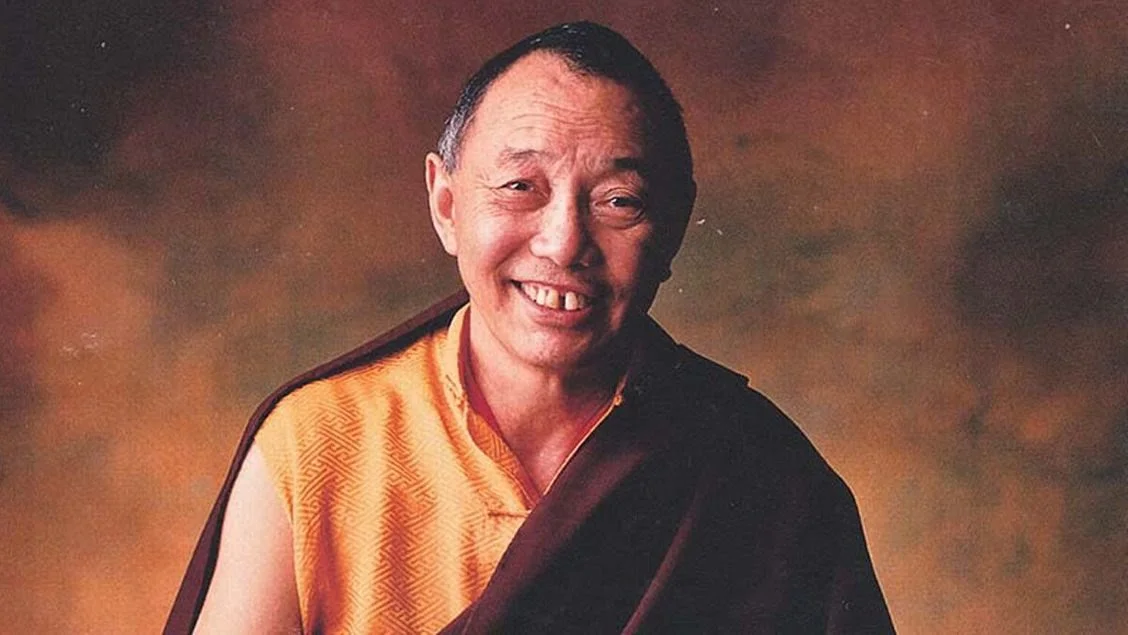
Gyatrul Rinpoche and Lama Zopa Rinpoche’s passing

Gyatrul Rinpoche, for me, was a lineage lama—as the main Dzogchen guru of Lama Alan Wallace, he was a teacher of my teacher. I never had a chance to meet him in person in North America, but have received incredible benefit from his books (including A Spacious Path to Freedom), and, of course, from the activity of his Dharma successors, including Lama Alan Wallace and Lama Sangye Khandro. He was instrumental on brining many rare Dzogchen teachings into North America, and then, by extension, to the entire world.

By contrast, Lama Zopa Rinpoche was very much my teacher—one of my root lamas, who especially benefitted me through his teachings on bodhicitta, but also generously dispensed personal advice.

It was Lama Zopa Rinpoche’s guidance that led me to develop an interest (and, through that, a certain understanding) of such practice systems as White Tara and the four immeasurables—things that are now at the heart of my work as an instructor. Lama Zopa Rinpoche was an incredible yogi and a true embodiment of kindness, and him passing away right amidst a smear campaign against his main teacher is a tragic loss for the world. For all of us, it as an invitation to use our wisdom and compassion to greater degree.

The passing of both these teachers leaves their students, in a way, groundless, just like the media campaign covered above. A familiar picture of reality shifts, and we are feeling a bit lost, confused, or forlorn. The great thing is that we have very simple questions that we can ask ourselves — for example, Having carefully analysed the situation, what do I have to offer? And How can I keep my practice alive and vibrant so that it benefits others? As long as we answer these somehow — for example, by turning to the practice of loving kindness — we are on the right track.
Experiencing Insight through Exploring Four Objects

April 15, 2023 Mikhail Morozov

In identifying major forms of practice we can add to our “inner diet”, my teachers sometimes mention three quintessential components of contemplative training—“quintessential” in terms of helping us establish the long-lasting, profound wellbeing of eudaemonia, or genuine flourishing. These would ideally be all present in our contemplative toolbox, but very rarely enter our life at the same time.

For many of us, our exploration would begin with just one of these three categories: (1) practices for attentional stability, centered around the different methods of shamatha; (2) methods for cultivating kindness and compassion, and (3) practices for cultivating insight into the true nature of reality. Quite often, it is categories 1 or 2 that speak to many people in the modern world—especially in the popular mindfulness movement—more than anything else.

Unsurprisingly, the third category has its own fans as well. Those who are led to a contemplative life by their desire to experience mystical union, or find satori, or reach irreversible freedom (or even a temporary alleviation of inner pain) are often strongly propelled into the world of insight.

On occasion, they would even experience the results of insight without (seemingly) much effort—which is said to happen to those who have a certain natural giftedness, or appropriate karmic propensity.

At the same time, there is also no shortage of people who somehow resist insight practices, feeling more at home in the world of attention training and heart cultivation, but not daring to engage in practices that seem quite brainy and potentially dangerous to our familiar perception of reality.

One of the reasons for this resistance is the very nature of insight methods. Their job, from a Buddhist point of view, is to challenge and untie some of the knots in our habitual patterns of perception, establishing freedom where there was previously cognitive (and emotional) constriction.

Our grasping at permanence is to be released, being gradually replaced by a clear understanding of mutability; grasping at independent existence is to be supplanted by a profound feeling of interdependence.

The various—and, in a way, numerous—practice techniques used to achieve this goal of liberation are insight practice, and the “enemy” they are meant to defeat is primarily our tendency to reify: to ascribe greater reality and stability to something that is mercurial, unstable, and is barely existent at all. (The way things actually do exist is also something to be ascertained through practice).

Buddhist insight practices—commonly known as vipaśyanā (in Sanskrit) and vipassana (in Pali)—can be categorised in various ways, both in terms of their primary emphasis and their historical origins. A quintessential system of such practices was originally presented by the Buddha himself and is known as the four applications (establishments, foundations) of mindfulness.

The name implies that that we apply our faculty of mindfulness, trained and perfected through attention-cultivating techniques, to the true nature of our experiences, divided into four major dimensions:

1) Body (which includes any type of materiality)

2) Feelings (pleasant, unpleasant, and neutral)

3) Mind

4) Phenomena (that is, all cognizable phenomena taken together or divided into major categories)

The act of applying mindfulness is done in the spirit of curious inquiry, and is supported by both attention-training and heart-cultivation—and, in return, supports those practices as well.

The simple insights we might gain from doing entry-level vipaśyanā practices are to be fed into the systems supporting our kindness, compassion, and overall wellbeing.

At the same time, these insights are experienced as a great source of joy in themselves—while not necessarily dramatic, they still allow us to feel a greater sense of easy and resilience, therefore strengthening our ability to move through life gracefully and with greater skill.

To try out some of the practices from this category, check out the meditations in this playlist

Seasonal gloom, loving embrace

March 2, 2023 Mikhail Morozov


This short essay was originally written for the Cultivating Emotional Balance (CEB) newsletter

Winter months, if you’re anything like me, can be a period of increased sadness, nostalgic and gloomy moods, and, for some people, even expressions of the SAD (Seasonal Affective Disorder), such as depression. Even those living in regions blessed with more sunlight and pleasant weather patterns can feel like their mental, physical, and emotional energy—along with their creative potential—are going into a type of hibernation. While putting a positive spin on everything is not always the best strategy (especially if it borders on false positivity that attempts to obscure the challenging aspects of our life), we are still free to experiment with different techniques for transforming our seasonal fatigue into something meaningful both for ourselves and others.

Whatever the sources of emotional support in periods of natural gloom might be, tenderness towards ourselves—a gentle, affectionate attitude—is always a good red thread to sow different types of care together. In my experience, it is certainly difficult to make it through the demanding winter months without treating myself as someone who deserves happiness, proper gentle care, and a certain degree of slowing down.

Those, of course, are not meant to happen at the expense of others—we are not trying to abandon ethical and social intelligence and merely using the winter blues as an excuse. Rather, this period might invite us to be just a bit more committed to self-care routines, to setting healthy boundaries, and to getting proper rest. 

One of the best practices for these periods of blues, in my experience, is loving kindness. In this case, it does not always mean assuming a proper posture and doing loving kindness meditation as a formal session. While important, that might not always be energetically viable, at least not for long hours—who hasn’t struggled with getting onto the cushion when there’s barely energy to move around the apartment? 

A more important approach is to let loving kindness suffuse our body and mind in small but significant ways. Wishing ourselves well while getting ready for a nap, or waking up from one, or when we are making yet another cup of tea; extending benevolent wishes to all beings as we observe the snowy landscape outside; soaking in hot water and imagining the waters of loving kindness flowing out to all who live.

When nature goes into hibernation, it shows us the promise of renewal and flourishing—the very flourishing that serves as a perfect reminder for our own potential happiness of being, or eudaemonia. However, there’s also renewal possible in hedonic matters, including our relationships, creative projects, and even our diet. We just don’t need to expect those changes to happen immediately after New Year’s. While the natural world is getting ready for the renewal of spring, we can also let things grow and bloom in their own time—with just a tad of gentle propelling from our side. If that propelling takes the form of a few loving kindness wishes here and there, combined with a little bit of skillful action, that’s good enough. Those wishes themselves will one day evolve into a boundless stream of benevolence renewing ourselves, others, and the world we’re aspiring to serve in small and big waves. When moving around, remember that the people you meet might have low levels of energy—emotionally, mentally, or physically. Some people might be experiencing burnout right now! Generate a wish for everyone’s wellbeing, so that a wave a joy coming from the inside can help everyone feel supported and benevolent.

TIP FOR ON-THE-CUSHION PRACTICE

Consider using gloomier and slower days (or seasons) as an inspiration, rather than a hindrance, for your loving kindness practice. Seasonal fatigue is only one of the multiple ways to label our experience; as an experiment, we can instead think of seasonal lows as a contemplative retreating of energy—a period of rest and germination—and then generate boundless wishes for flourishing, directing them at ourselves and others.

TIP FOR PRACTICING OFF THE CUSHION

When moving around, remember that the people you meet might have low levels of energy—emotionally, mentally, or physically. Some people might be experiencing burnout right now! Generate a wish for everyone’s wellbeing, so that a wave a joy coming from the inside can help everyone feel supported and benevolent.

The unceasing sound of mantra

January 21, 2023 Mikhail Morozov

A quick survey of the types of practice done in the most popular pilgrimage locations associated with the Indo-Tibetan Buddhist tradition—including Bodhgaya, Sarnath, and the great stupas of Boudhanath and Swayambhunath—would show that one of the most popular contemplative methods used in those locations is mantra recitation. A typical—and very widespread—example would be the hundreds and thousands of Himalayan elders engaged in the accumulation of the OM MANI PADME HUM mantra, fingering their prayer beads (malas) and often accomplishing a few hundred million recitations.

Although some Western (and Western-influenced) practitioners discount mantra recitation as either superstition or merely a convenient technique for keeping the mind busy, this colonial/reductionist interpretation can easily be remedied by looking into the inner significance of the practice. Inviting people to recite millions of these simple verbal formulas (often, though not always kept in their original Sanskrit form), the Into-Tibetan contemplative tradition describes a wide range of potential benefits that can be attained—benefits associated both with the mantra’s effect on the interdependence we exist within and with its ability to affect and transform our heart-mind energy.

The word “mantra” itself famously means “that which protects (tra) the mind (man or manas)”. On the foundational level, this protection simply refers to the mantra’s ability to keep us away from rumination: some types of mantra practice (used as basic level concentration techniques) literally instruct us to channel the mental energy into a never-ending repetition of a sequence of syllables.

Those syllables, in turn, have five levels of significance that all feed into the effectiveness of our practice:

  1. Mantra’s interpretive meaning (for example, “Om! Jewel in the Lotus. Hum” for OM MANI PADME HUM), usually describing or inviting different facets of enlightened reality and able to inspire our mind

  2. Mantra’s audible vibration, which affects anyone who hears, recites, or chants the syllables

  3. Mantra’s ability to shape our breathing patterns, therefore affecting our subtle nervous system, or “subtle body”, and the flow of our inner energies

  4. The inspiring energy (or “blessings”) that the mantra receives from the master or Buddha-figure primarily associated with it (for example, Buddha of Compassion in the case of OM MANI PADME HUM)

  5. The inspiring energy that comes from numerous generations of practitioners using and realising the same formula, and from the of invisible community of practice that we belong to in this day and age


While all of these facets of mantra’s efficiency are important, they are never perceived in isolation—and neither is the practice mantra recitation itself, which, for the Indo-Tibetan tradition, is often discussed within the much larger domain of Buddhist tantric practice.

Within that context, one would first establish a certain level of mental stability, renunciation, altruistic love, and wisdom seeing the selflessness of all things. All those would then feed into an elaborate practice combining visualisation, mantra, and “wisdom”, or generation of certain mental states associated with profound types of insight.
This, however, does not mean that these advanced practices is where mantra recitation begins. On a popular level, strongly associated with the most common mantras (including OM MANI PADME HUM, or the mantra of Tara, or the mantra of Guru Rinpoche) chanting or repeating mantras is just a wholesome activity that can be done by anyone—anywhere, at any time, usually in conjunction with strong faith in the efficiency of the practice and a certain level of benevolence. It is not uncommon for the energy of the mantra to connect to our inborn qualities of compassion and wisdom, thus helping them flourish. Along those lines, Lama Zopa Rinpoche often quotes the example of his own mother, who, in addition to having developed very strong compassion in her lifetime (partly as a result of her great devotion to the mani mantra), was eventually reborn as a child with very strong and clear past-life memories.

The oral instructions I’ve received from a variety of masters usually combined these two sides: the elaborate profundity of full-form tantric practice, and the elegant simplicity of faith-infused nonstop recitation. “Full-fledged” mantra practice, leading to a realisation of the nature of reality, might take years and decades (if not lifetimes) to master; and yet, the simplest and most accessible mantras are always at our disposal, providing an easy way to soothe our mind, and, potentially, even positively affect the overall fabric of our personal interdependence.

In a way, the transformative power of mantra can be compared to the power of plant-based medicinal substances or of our breath itself—once our gross minds gets intoxicated (and therefore subdued) by the power of sincere recitation, more and more opportunities for expressing profound goodness emerge from within.

It’s our job to then catch those spurts of compassionate energy and use them for the benefit of all beings—exactly as the meaning of the foundational mantras (such as OM MANI PADME HUM) suggests.

To learn more about mantras in Indo-Tibetan Buddhism, you can read the following

What is a Mantra

Recitation of Mantras

The benefits of reciting OM MANI PADME HUM

Or try these guided practices which include mantra recitation

(Also available on Insight Timer)

Approaching Chenrezig with OM MANI PADME HUM

Golden Tara of Auspiciousness

Red Tara of Bodhicitta

Guru Rinpoche Guided Practice

Green Tara Meditation for Wisdom and Compassion


“When I was about eighteen years old, I was in England and I had just “discovered” Tibetan Buddhism. I’d heard about the mantra, OM MANI PADME HUM. I assumed that we were supposed to say OM MANI PADME HUM all the time. I was working in a library, and I started saying, OM MANI PADME HUM continuously. Of course I couldn’t say it aloud because there were people around. But I started saying it in my heart. Within a very short time, my mind split and there was this quiet, calm, spacious mind with the OM MA NI PAD ME HUM reverberating within it, then there was this peripheral mind with all its thoughts and emotions. The two minds were detached from each other. Therefore I was able to carry on my everyday life more efficiently than before, because I was in the present all the time, yet with this detachment, this space in the mind. Whatever happened on the periphery was indeed peripheral. This gave great poise to my mind and the ability to exercise far more choice over my thoughts and feelings because I was no longer immersed in them. It was a great breakthrough for me.”

Jetsunma Tenzin Palmo, “Reflections On a Mountain Lake: Teachings on Practical Buddhism”

Calling out to Tara

November 6, 2022 Mikhail Morozov

This year has been filled with tragic losses, unspeakable evils, and dramatic escapes. At one point, just a few weeks ago, I found myself walking across a dark plain, moving towards the land border that I was trying to cross on foot in the middle of the night—hoping to do it before any escape would become impossible.

The nature of the situation was fascinating: I was alone (in more ways than one), under bright stars, and my thoughts went to all those who had recently experienced journeys that were much more perilous than mine. I also thought of those who were currently safe in their own homes—enjoying a sense of relative stability, but still subject to the invisible movement that takes us all to the ultimate transition beyond the rim of this life.

Walking in the dark, I was using my little electronic tally counter, pressing the button each time I said a short prayer that has become an integral part of my Buddhist practice in recent years. The prayer—two lines received in a visionary encounter by Dudjom Lingpa, a famous Dzogchen master from the 19th century Tibet—was directed at the female buddha Tara, whose name can literally be translated as “star”: a benevolent presence that guides us beyond the dangers of saṃsāra, both outer and inner:

Tara image of modern Indian origin (from Wikimedia Commons collection). Artist unknown.

Noble and exalted Tara, you know me.
Protect me from all fears and suffering, I pray.


Tibetans chose to render Tara’s name by relying on the meaning of the Sanskrit root “tra” – “to save from”; in Tibetan, she therefore became Drolma – The Saviouress, fast in action and stable in her boundless compassion directed towards all sentient beings.

Tara has numerous visual forms, expressing her qualities, and a vast number of associated prayers, mantras, praises, and practice text. The form most commonly invoked by most followers of the Tibetan Buddhist tradition , is that of “Tara of the Acacia Forest”, which came to be known as simply “Green Tara”—a peaceful and yet somewhat fierce female presence, whose right extended leg shows her willingness to get up and help beings as soon as they need assistance.

Green Tara’s color represents the element of air, or wind. Like the mighty Hanuman (Vayuputra, “Son of the Wind”) in the Hindu tradition, Green Tara is strongly associated with the movement of energy, and that movement—whether in some outer form or simply in our patterns of thinking—brings clarity, compassion, and peace. This is what I was thinking about while walking towards potential safety: how a fusion of self-compassion, common sense, and concern for others can take us through many transitions, hopefully bringing us to a “safe place to land”.

The winds that Green Tara represents are not limited to the dynamic events in the outer world, even though she is powerfully connected to those. Like any other meditative deity practice in Tibetan Buddhism, Tara meditations are believed to affect the interdependence that gives rise to our life experiences. As such, they determine where we find ourselves—essentially, where our compulsions take us. As Tara’s wisdom wind supplants the contaminated “karmic winds” that bring suffering, we might find ourselves acting for the benefit of others more and more often—while still gathering the types of support that we need on a personal level.

One of the earliest memories of doing Tara practice I have is reciting some of her root mantra, OM TARE TUTTARE TURE SOHA, before important exams. Over the course of many years, this trivial level gave way to a sense of Tara’s presence in every aspect of my life: not as a benevolent spirit hiding in the corner of my room, but as a symbol of my own buddha nature that expresses itself in multiple ways.

It’s not incorrect to say “There’s no Tara outside of my own mindfulness, loving kindness and wisdom”, since for us, Tara inevitably manifests in conjunction with these qualities, or as them. At the same time, many people find great inspiration in thinking that Tara—who is sometimes described as a trans-historical figure, with her own unique story of awakening—has eventually become an all-pervading field of enlightened energy that is available to everyone who needs help. After all, the simplest way to connect to Tara taught in the Tibetan tradition is simply using the vocative form of her own name—crying out “TARE” as we move through our own dark plains towards our own places of safety.

Some guided Tara materials for your practice:

Green Tara meditation for wisdom and compassion

Morning Meditation: White Tara and Loving Kindness

White Tara Meditation: Inviting the Elements

Red Tara Dispelling War: Yulle Gyalma

White Tara Practice for our Spiritual Mentors

EcoDharma Course: Connecting to the world to nourish and protect

August 27, 2022 Mikhail Morozov

These last few days have been filled with a lot of work, a process of gradual adjustment, and a lot of joy associated with all the support I’ve received from many of you and Dharma friends from all over.

Something I have also been exploring actively, as a source of support, is my contact with the environment, the elements, and the plants and trees around. This is a deliberate exploration that has been crucial for my mental wellbeing over the last 6 months. Although I expected myself to feel worse at times, due to the shifting environments, unclear prospects and being far away from most friends, actively attending to the natural elements has been a huge source of inner nourishment and stability.

This practice—or, better yet, this body of practices—is intimately connected to what is now more and more often referred to as EcoDharma. When asked what this word refers to, I’d say it’s a system of knowledge and practice that arises at the intersection of three questions:

  • How can our contemplative practice support us in protecting the Earth, its natural world and its inhabitants?

  • How can our environmental activism be a spiritual practice in itself?

and

  • How can our contact with nature support and nourish both our mental health and the more profound insights brought about by contemplative inquiry?

I like to further simplify these questions into two points: how can we breathe out, offering something meaningful to the planet and the natural world, and how can we breathe in, enjoying our role as a part of natural systems. Both would be crucial for a meaningful engagement with EcoDharma: its in their balance that we are protected from both complacent nature-gazing that ignores the urgency of climate action and from the burning out that would inevitably happen if we failed to nourish our body and mind properly.

My own interest in this field of knowledge — a discipline that integrates multiple forms of practice and understanding, including that of systems thinking and deep ecology — arose in approximately 2017, when I spent my first few months slowly approaching the element-related practices preserved by the Tibetan spiritual tradition; some of those came from the lineage of Indian Buddhism and some were indigenous to the Tibetan plateau and preserved by the Bön tradition. This exploration kept slowly unfolding as I spent years teaching introductory classes on secular ethics, inevitably creeping into EcoDharma territory: indeed, one can’t imagine one’s ethical system to be comprehensive unless it includes at least some principles related to how we deal with the environment. As public awareness of the urgency of action kept increasing (even though its still infinitely far from an optimal level), so did the amount of EcoDharma elements I would try to incorporate into the humble classes I’d facilitate.

This Fall (starting in less than 2 weeks), for the first time, I am honored to present a course specifically on EcoDharma with the Tibet House US. This will be a joint communal exploration, rather than a transmission of some knowledge that is fixed in format and content.

Indeed, almost any element of any authentic Dharma – whether Buddhist, Hindu, Christian or that of any other tradition including secular humanism – can be used in service of our environmental work, and the process of contemplating that is something I want to initiate for all the participants.

However, beyond that, there are some key teachings of the Buddhist tradition — accessible to anyone, really — that can serve as a powerful source of sustenance in our work to rebalance our mind and become a more harmonious element in planetary interdependence. I very much looking forward to fine-tuning and exploring our practice of those.

EcoDharma work, like all socially transformative endeavours, is necessarily communal (while also personal), and in meeting for 6 sessions to explore some key topics and play around with some key practices, we are forming an intentional (albeit online / invisible) community that would continue to exist indefinitely—a community of people who care and are looking at the arising challenges with both spaciousness and a level of creative zest.

If that seems appealing to you, I am hoping that this course—and any future offerings around this topic—would bring you a sense of meaning and an experience of joy.

(On a side note, a humble invitation: if you know anyone who might be interested in this course/topic, please invite them — the more the merrier

Stepping Forth: Same Work, New Profession [An Open Letter]

August 17, 2022 Mikhail Morozov

Dear friends,

I would like to start by expressing my deepest gratitude to all of you for continuously supporting me on my path and in my humble activity. Whatever sparks of mindfulness I have been able to ignite in the dullness of my ignorant mind, and whatever benefit came about from my translating and teaching, could only arise in interdependence that includes all of you. I can only hope and pray that going forward, the positive aspects of this interdependence will be strengthened and the negative ones removed.

There will, however, be a large change for me in all of it from today onwards. Today, August 17 — on the auspicious anniversary of Buton Richen Drup (the compiler of the Tibetan Buddhist canon) — I have returned my monastic vows after exactly 9 years and 5 months of monastic training. That means that from here onwards, I am continuing my path in the role of a lay practitioner, translator, and instructor.

I can’t say I am telling you this with a “heavy heart”, but neither would it be fair to say it’s all light and bliss. A momentous decision of this caliber is inevitably accompanied by a lot of mixed emotions. Its root usually lies in the attempts to find compatibility between the way one feels inside and the way one looks on the outside.

Why do people return their monastic vows?

Multiple answers exist, since every situation is different. Just in 2022, I’ve seen multiple colleagues take this step, all in their own unique ways.

In general, it happens because we are all trying to determine how we want to be supported by the world around us and what it is exactly that we want to offer back. Some people want to serve in a different capacity; some want to get married; some start taking care of their elderly relatives, or working a regular job, and then see a change in their life perspective. In some traditions—for example, in Thailand—monastic precepts are often taken only for a period of time, either earlier in one’s life or to create the merit for a deceased relative. Of course, some people realise they want to do something completely different with their lives altogether.

Part of my own decision is exploring the topic of how I want to be held in terms of my own hedonic (or outer) wellbeing; another large part is exploring what I can offer to other beings and what would be the form most appropriate for me to do that.

Do people continue doing the same Dharma work after disrobing? Is that permissible?

One’s professional skills do not change due to returning one’s precepts, and neither does one’s level of knowledge. Whether one wants to continue doing the same work depends on one’s decisions and the type of work in question.

For continuing the work of translating and offering basic practice instructions—my specialty—there is no shortage of examples from both recent and more distant past. Some of my own primary teacher and mentors, along with the teachers I deeply respect—Tsoknyi Rinpoche, Jetsun Chime Luding, Dzogchen Ponlop Rinpoche, Tenzin Wangyal Rinpoche, Gyatrul Rinpoche, Alan Wallace, Robert Thurman and others—are former monastics. Examples from slightly more distant past would, of course, include such luminaries as Dilgo Khyentse Rinpoche, Khyentse Chokyi Lodro, Chagdud Tulku Rinpoche and even the great and exceptional Khunu Lama Tenzin Gyaltsen (who, according to his extended biography, was a novice monastic earlier in his life).

The point of doing these types of work—teaching, translating, organising—is not whether one is a monastic; it’s whether one’s work is imbued with growing knowledge and attempts to continue becoming more mindful, even when we come across our human fallibility again and again. Part of that is seeing the dirt; another part is seeing the radiance of our Buddha nature. Trying to reconcile the mud and the lotus adds humility to the mix—one reason why I’ve never seen any real teacher, whether lay or monastic, claim that they have realised the fullness of the Dharma. It’s about incremental change and continuous attempts.

Will you continue doing the same types of work?

Yes: I will continue translating and interpreting in the Tibetan Buddhist context, and offering review classes, when appropriate. I will be involved in the book publishing business. I will continue creating audio and video content that might support people in their practice, whether Buddhist or secular.

I will also continue offering courses in the different modalities I have a connection to, including Cultivating Emotional Balance (CEB), and increasingly pursue the main reason I am now wearing green color—the interdisciplinary field of EcoDharma. That one, of course, lies at the intersection of our contemplative life, natural beauty, and the urgency of protecting the natural world on the basis of truly understanding interdependence.

Over these years, I have offered a very limited number of 1-on-1 sessions for practitioners who want to fine-tune their practice. That part of my work might also emerge more strongly as time permits; however, when I have to choose, I would prefer to work with groups since the number of people I can help at the same time is greater in group classes.

Another thing I’ve had to do as a monk is offer advice on corporate cultural transformation, usually around the topics of genuine wellbeing, mindfulness, or emotional balance. These types of work are also something I’m happy to pursue.

Since not much is changing about my work, I am still, at the moment, essentially a “free artist”: someone offering content, classes, practice sessions, and so on when the interest or the need arises and if/when the invitations come. As such, I am still gratefully accepting cups of tea (which, beyond actual tea, usually translate into food, books, and sometimes work tools).

Will you continue using the same name?

As a writer, translator, and content creator, I decided to maintain the continuity of authorship attribution by continuing to use my current name. That is not something unique to me; many former monastics in the English-speaking world retain their full name or at least parts of it (like my dear Dharma friend Tashi Mannox). Of course, no longer being a monk, I am in no way “Venerable” (not that anything about me personally ever made me venerable anyway)–instead, I’ll be using “Michael” as my first name, bringing the overall combo up to “Michael Lobsang Tenpa”.

Some people might prefer to continue using “Lobsang” or “Tenpa” (there was always difference in what different people found easier to pronounce), whereas some would simply go for “Michael”. I’m happy with any of these options—as such, they would not be deadnaming (which is often a problem when both ordaining and disrobing).

A somewhat comical additional note: what’s a good way to refer to me when talking to others? (Apart from “flop”, of course). If before you said things like “I’m listening to meditations from this Buddhist monk who…”, good alternatives would be saying “from this Buddhist translator”, “from this Buddhist meditation instructor” or even “this Eco-mindfulness instructor”.

A penultimate note, even more comical: despite wearing green shirts and green shorts, I would ask you to not try and set me up with anyone, and to not hit on me, either. For the first few years or decades, I’ll be too busy trying to do pushups.

A serious final note: I understand that this step might be disappointing for some people and absolutely “nothing special” for others. While acknowledging the potential impact, I can only continue hoping that my future work—largely similar in nature, but with a bit more greenery to it—will continue to bring some benefit, in the same way I’ve benefitted by some many who have gone before.

These last 9 years have been incredibly special; out of those, I have cumulatively spent 1 year in retreat and offered service and studied for the remaining 8. There were moments of frustration and moments of great joy, along with moments of intense learning. That learning now continues in greener outfits and with a tiny bit more hair.

Always grateful for the connection with all of you,

Lobsang

For the last talk I gave as a monastic, check out this video:

Four Immeasurables and the Tibetan Buddhist Path

In News and Updates Tags personal news, monasticism
← Newer Posts Older Posts →

"'Kindness never makes anything worse, and it can often make things better" - Sherwood Smith